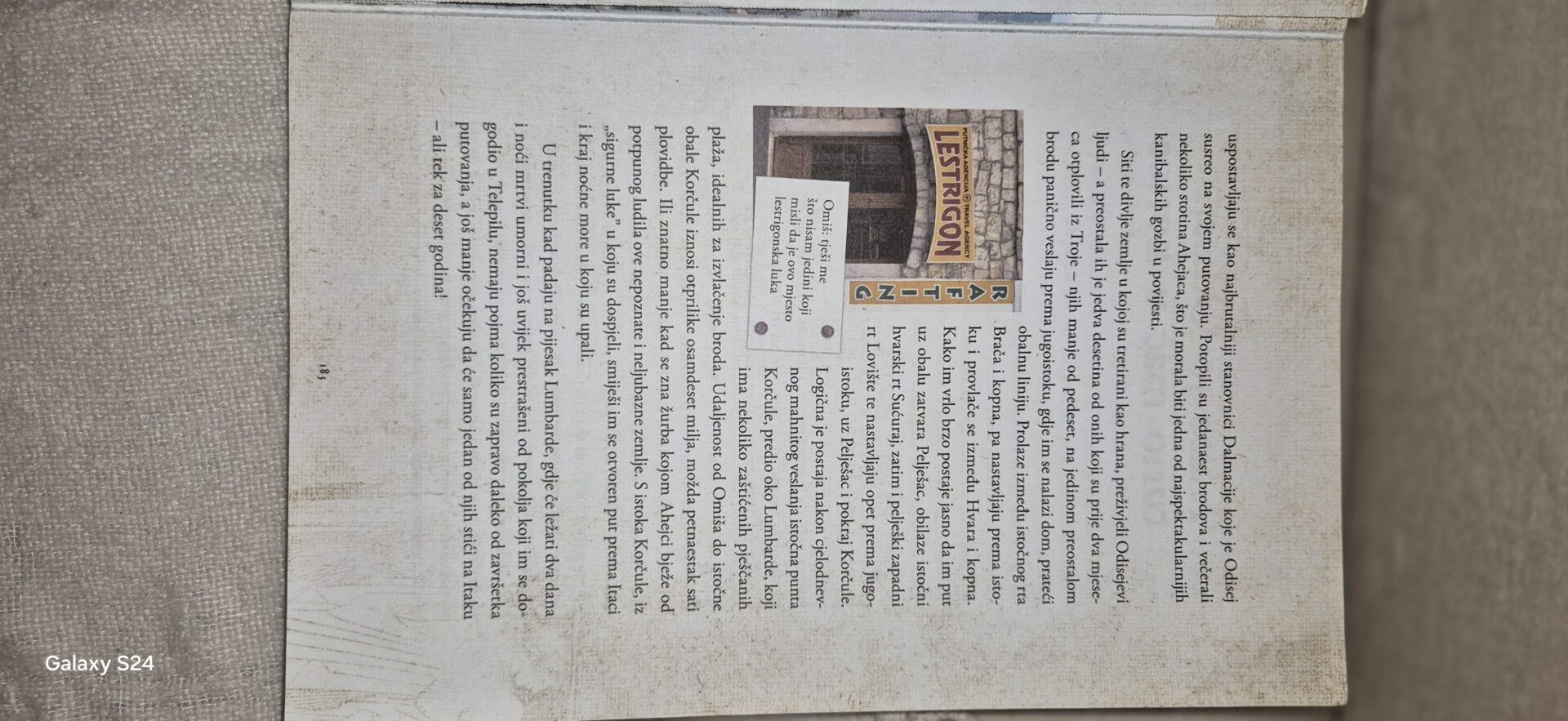
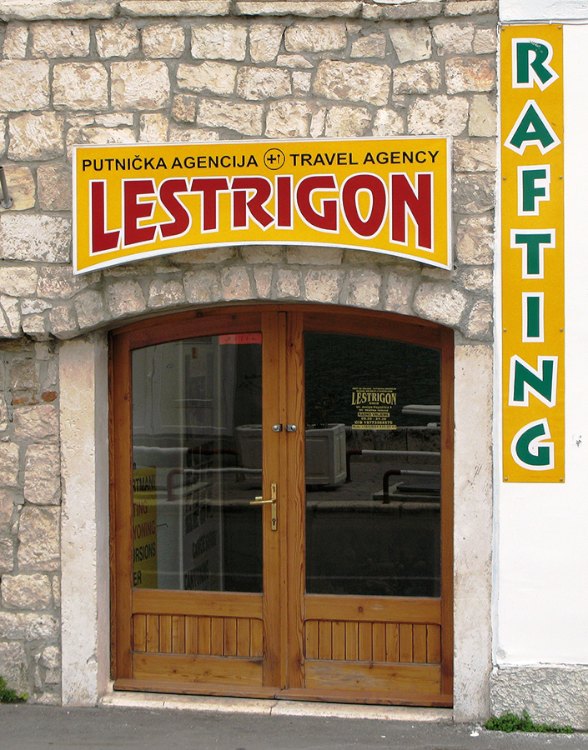
lestrigon.agency@gmail.com
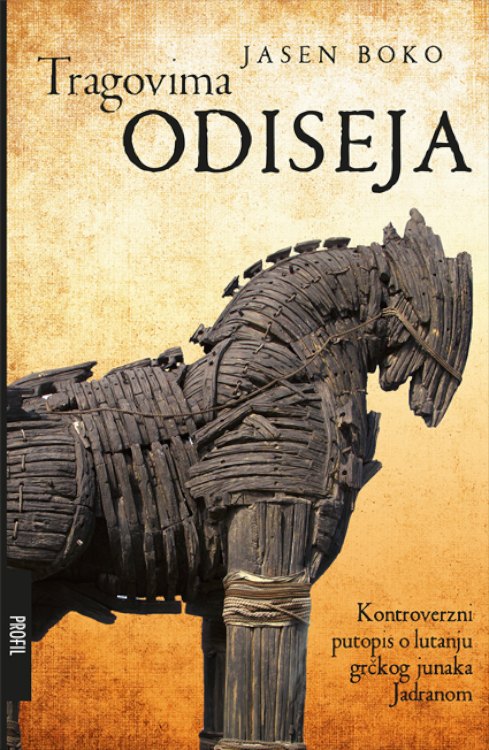
Jasen Boko – ON THE TRACKS OF THE ODYSSEY
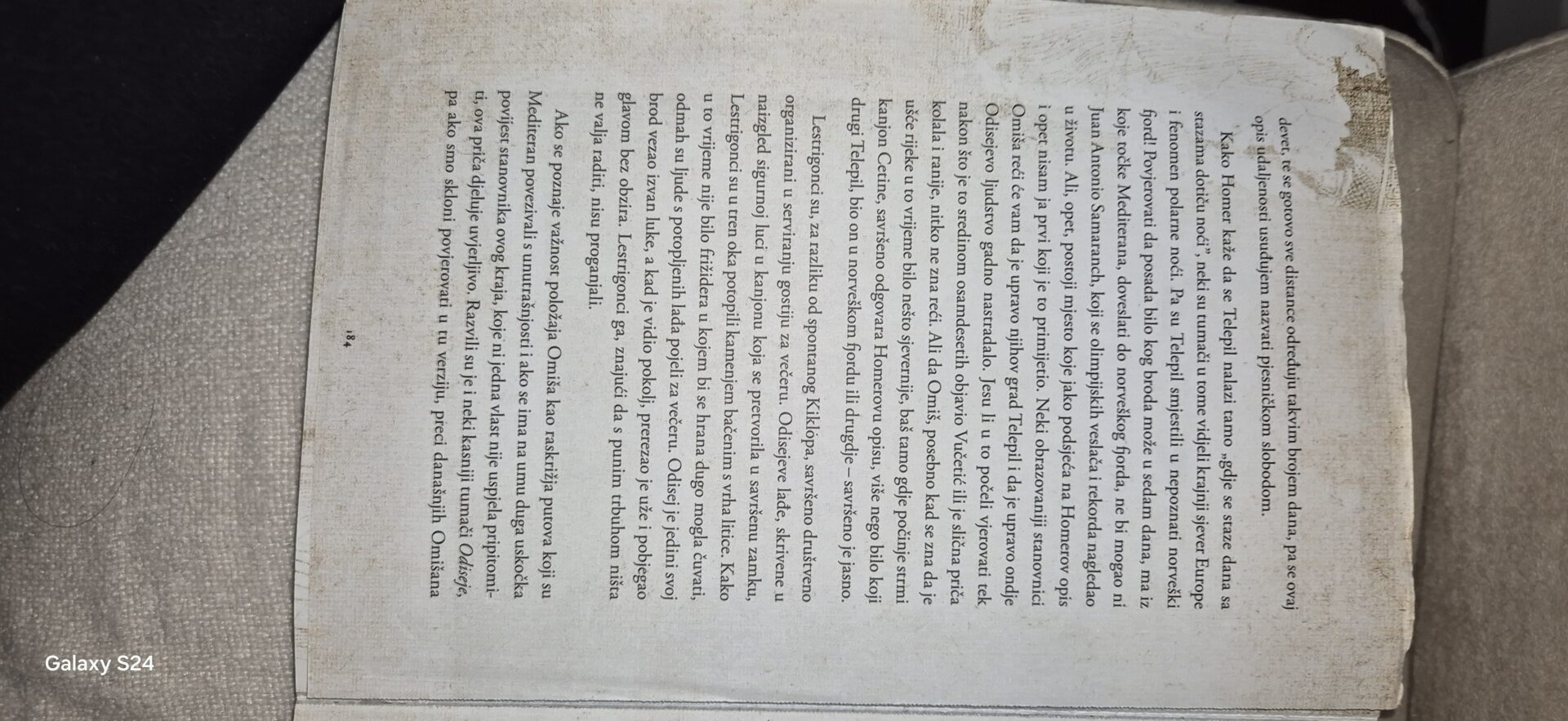
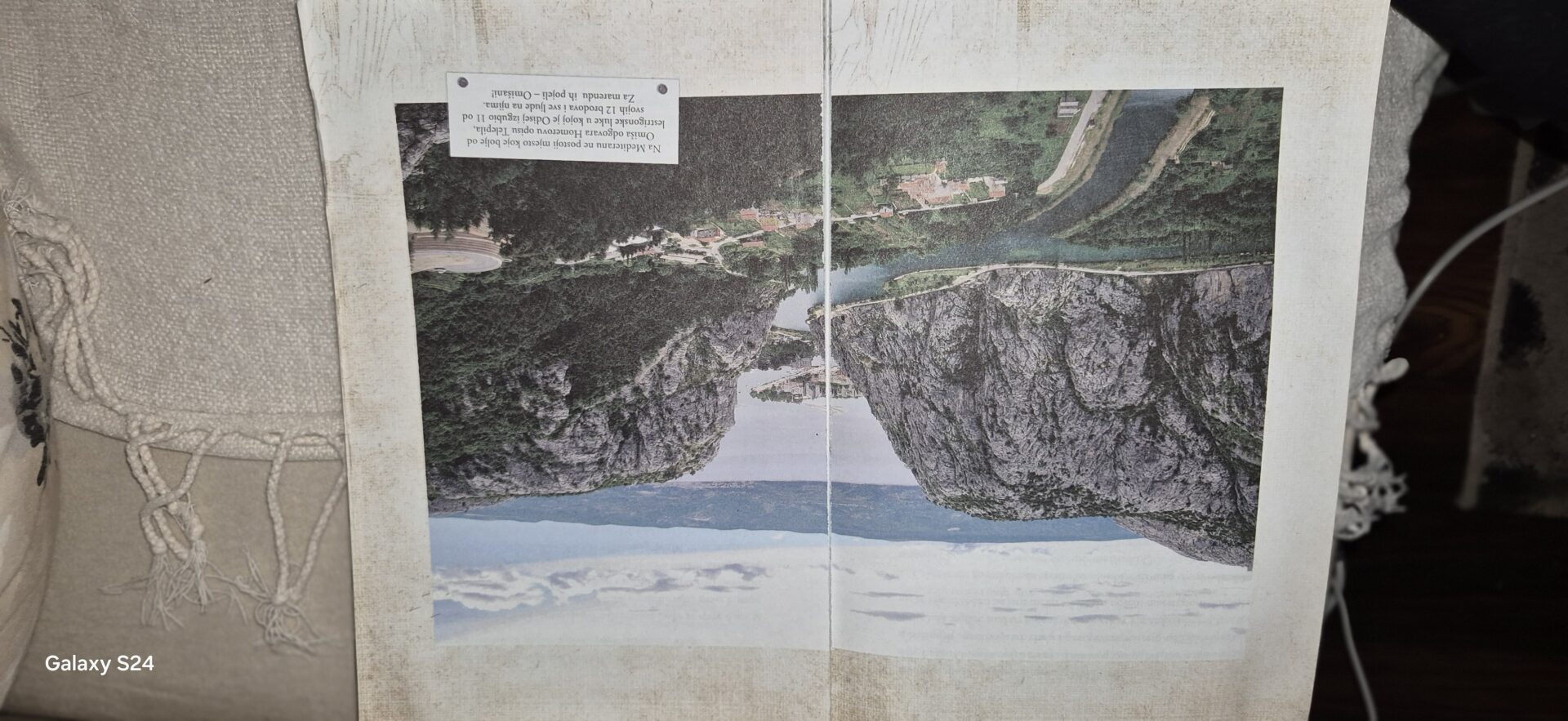
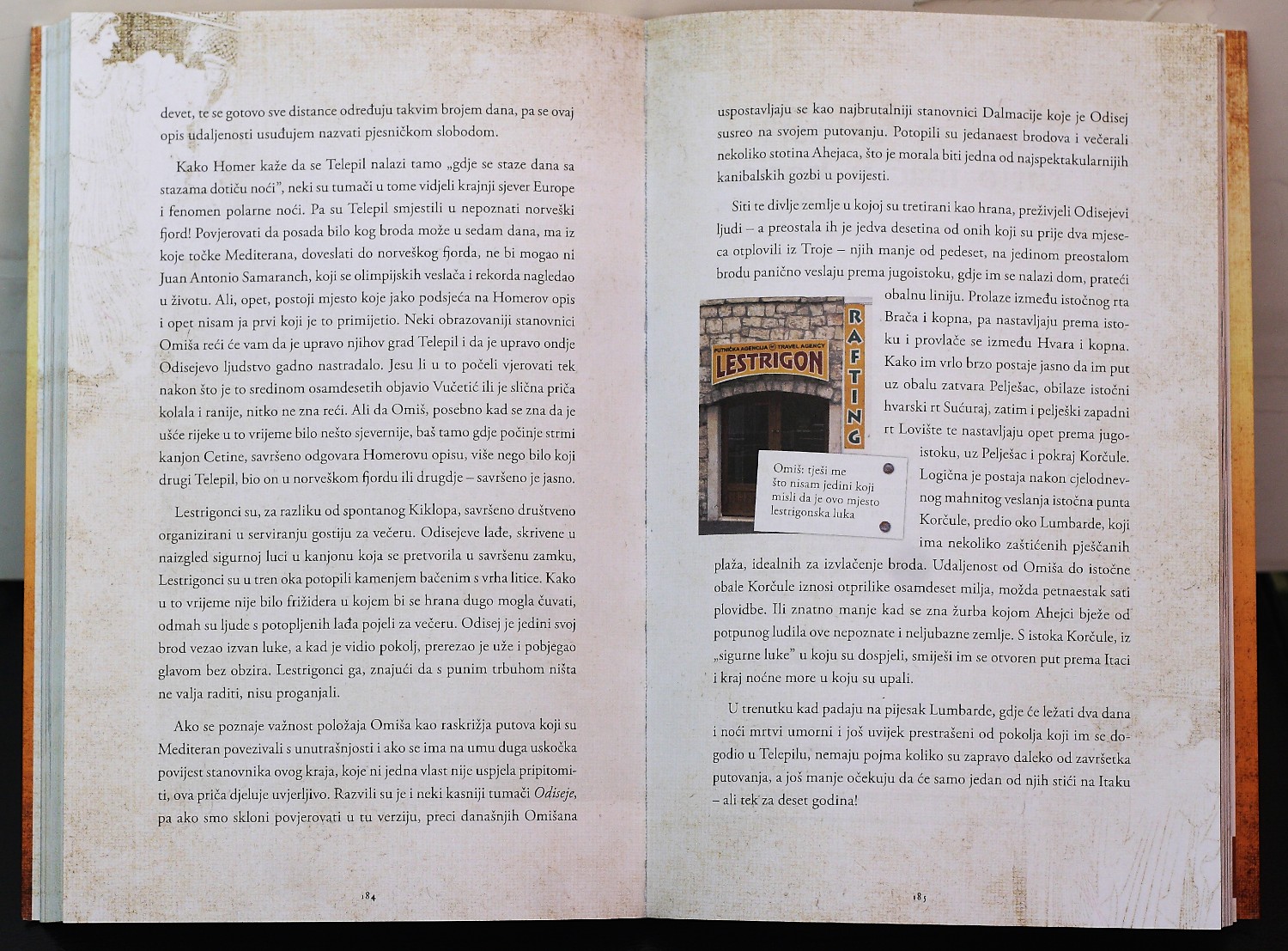
“…Since Homer says that Telepil is located “where the paths of day and night touch”, some interpreters saw this as the far north of Europe and the phenomenon of the polar night. So they placed Telepil in an unknown Norwegian fjord! Even Juan Antonio Samaranch, who has seen enough Olympic rowers and records in his life, could not believe that the crew of any ship could row to a Norwegian fjord in seven days, no matter where in the Mediterranean. But, again, there is a place that strongly resembles Homer’s description and again, I am not the first to notice it. Some of the more educated residents of Omiš will tell you that their town is Telepil and that it was there that Odysseus’s men suffered a terrible loss. Whether they only started believing this after Vučetić published it in the mid-eighties or if a similar story had been circulating before, no one can say. But it is perfectly clear that Omiš, especially when we know that the mouth of the river at that time was somewhat further north, right where the steep canyon of the Cetina begins, perfectly matches Homer’s description, more than any other Telepyle, be it in a Norwegian fjord or elsewhere. The Lestrygonians, unlike the spontaneous Cyclops, were perfectly socially organized in serving guests for dinner. Odysseus’ ships, hidden in a seemingly safe harbor in the canyon that turned into a perfect trap, were sunk by the Lestrygonians in the blink of an eye with stones thrown from the top of the cliff. Since there were no refrigerators in which food could be stored for a long time at that time, they immediately ate the people from the sunken ships for dinner. Odysseus tied his only ship outside the harbor, and when he saw the carnage, he cut the rope and fled without a care.
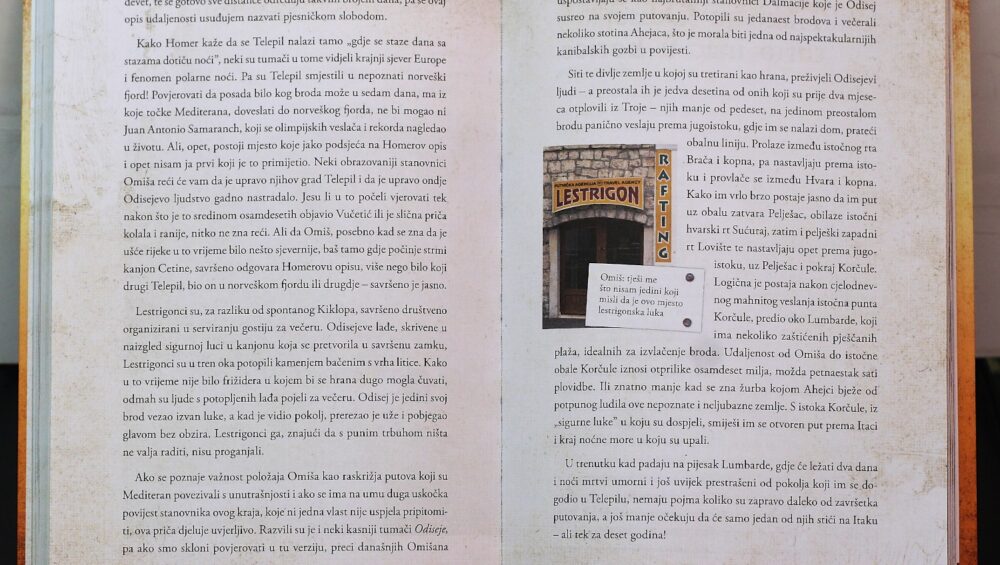
The Lestrygonians, knowing that nothing should be done with a full stomach, did not pursue him. If one recognizes the importance of Omiš’s position as a crossroads of routes that connected the Mediterranean with the interior, and if one considers the long Uskok history of the inhabitants of this region, whom no government has managed to tame, this story seems convincing. It was also developed by some later interpreters of the Odyssey, and if we are inclined to believe this version, the ancestors of today’s Omiš people establish themselves as the most brutal inhabitants of Dalmatia that Odysseus encountered on his journey. They sank eleven ships and dined on several hundred Achaeans, which must have been one of the most spectacular cannibalistic feasts in history.
Fed up with this wild land in which they were treated as food, the surviving men of Odysseus – and there are barely a tenth of those who sailed from Troy two months ago – fewer than fifty of them, on the only remaining ship, row in panic towards the southeast, where their home is located, following the coastline. They pass between the eastern cape of Brač and the mainland, then continue eastward and weave between Hvar and the mainland. As it soon becomes clear to them that their path along the coast is blocked by Pelješac, they round the eastern cape of Hvar, then the western cape of Pelješac, Lovište, and continue southeast again, along Pelješac and past Korčula. The logical stop after a full day of frantic rowing is the eastern cape of Korčula, the area around Lumbarda, which has several sheltered sandy beaches, ideal for pulling out a ship. The distance from Omiš to the eastern coast of Korčula is approximately eighty miles, perhaps fifteen hours of sailing. Or considerably less, given the haste with which the Achaeans flee from the utter madness of this unknown and unfriendly land. From the east of Korčula, from the “safe harbor” they have reached, an open road to Ithaca and the end of the nightmare they have fallen into smiles upon them. At the moment they fall onto the sands of Lumbarda, where they will lie for two days and nights, dead tired and still terrified from the massacre that befell them in Telepylo, they have no idea how far they are from the end of their journey, and even less do they expect that only one of them will arrive in Ithaca – but only in ten years!.”
I HEREBY PUBLICLY THANK MR. JASEN BOKA, PROFIL MULTIMEDIJA ZAGREB PRESS, AND ANOTHER MR. ANTI GRANIĆ, OSLOBOĐENJE SARAJEVO PRESS FOR THEIR COMPLIMENTS AND THE PHOTOS THAT WERE PUBLISHED.
LESTRIGONIANS AND OMIŠ
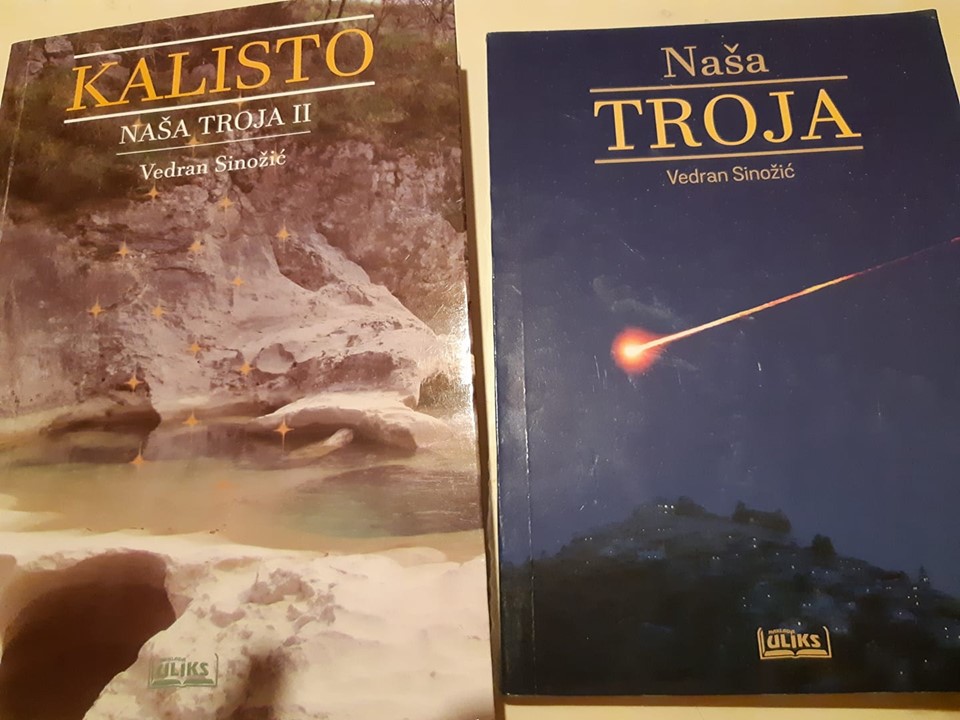
Dear employees of the Lestrigon tourist agency, Having seen your website, which preserves and protects our oldest historical and cultural heritage associated with the works of Homer, I decided to write to you with a few words. I am the author of the book Our Troy, which brings the discovery of Troy and Ithaca on the Adriatic. Further research prompted me to write a second book – Callisto, which, among other things, also talks about the location of the Laestrygonians, which is precisely the area of Omiš, and not other competing locations such as Boniface in Corsica. First of all, I would give full support to Jasen Boka here, for the sake of preserving our prehistory. In short, I entered this story – about the correct location of the land of the Laestrygonians – in a very skeptical way, not following my first impressions, which are nevertheless extraordinary in their description, and I gave my own model without the influence of other researchers. Here is what ruled the day – the land of the Laestrygonians is not an island, because Homer would have explicitly stated this, like the descriptions of all the other places visited by Odysseus. – the land of the Lestrigonians is somewhere on the way from Aeolia, the middle of the Mediterranean to Ithaca, which is in the west of Kvarner, it is a path that Odysseus knows, because only in one previous episode he traveled towards Ithaca, so in the second attempt he starts on the same path, that is, again from the middle of the Mediterranean on the KNOWN way to Ithaca. – Lestrigonians are not wild cannibals like the Cyclops, but they are actually civilized inhabitants of the city of a famous hero from Homer’s Achaean world. – However, Odysseus suddenly transforms them into giants and cannibals, and this is because they caught him in an unexpected trap. The explanation for this is as follows: – On his way, Odysseus turned into the well-known port of his leader Agamemnon, not knowing that there had been a coup in the country and that Agamemnon had been killed, and the government had been replaced and was now hostile to Odysseus, who at that moment was its biggest threat. – The Lestrygonians are therefore another, artificial name for the former friends and allies.
I presented this theory in my second book, Callisto, which is currently in print, and as soon as it is available I will send it to you, so that you have another confirmation (independent of other theories and authors who also talk about Omiš) about the location of the Lestrygonians, which is indeed Omiš and the area around it. I would also like to say that I appreciate people who care about preserving old epics, and who recognize that their land is that mystical mythical place, making efforts to ensure that this legend does not lose its shine. Of course, our tourism also requires a story with heart and soul, which successfully unites all the elements, and I hope that this letter of mine and, of course, my new book will help you. Author of the book Our Troy, Vedran Sin